
Hotel software comparison
Booking engine vs PMS vs channel manager: what is the difference?
A booking engine serves the guest booking flow, a PMS supports internal property operations, and a channel manager distributes rates and inventory across connected sales channels. They solve different problems and should not be used as interchangeable labels.
This guide is for hotel owners and teams assembling a new stack, reducing duplicate entry, or identifying which role an existing feature actually performs.
Last reviewed:
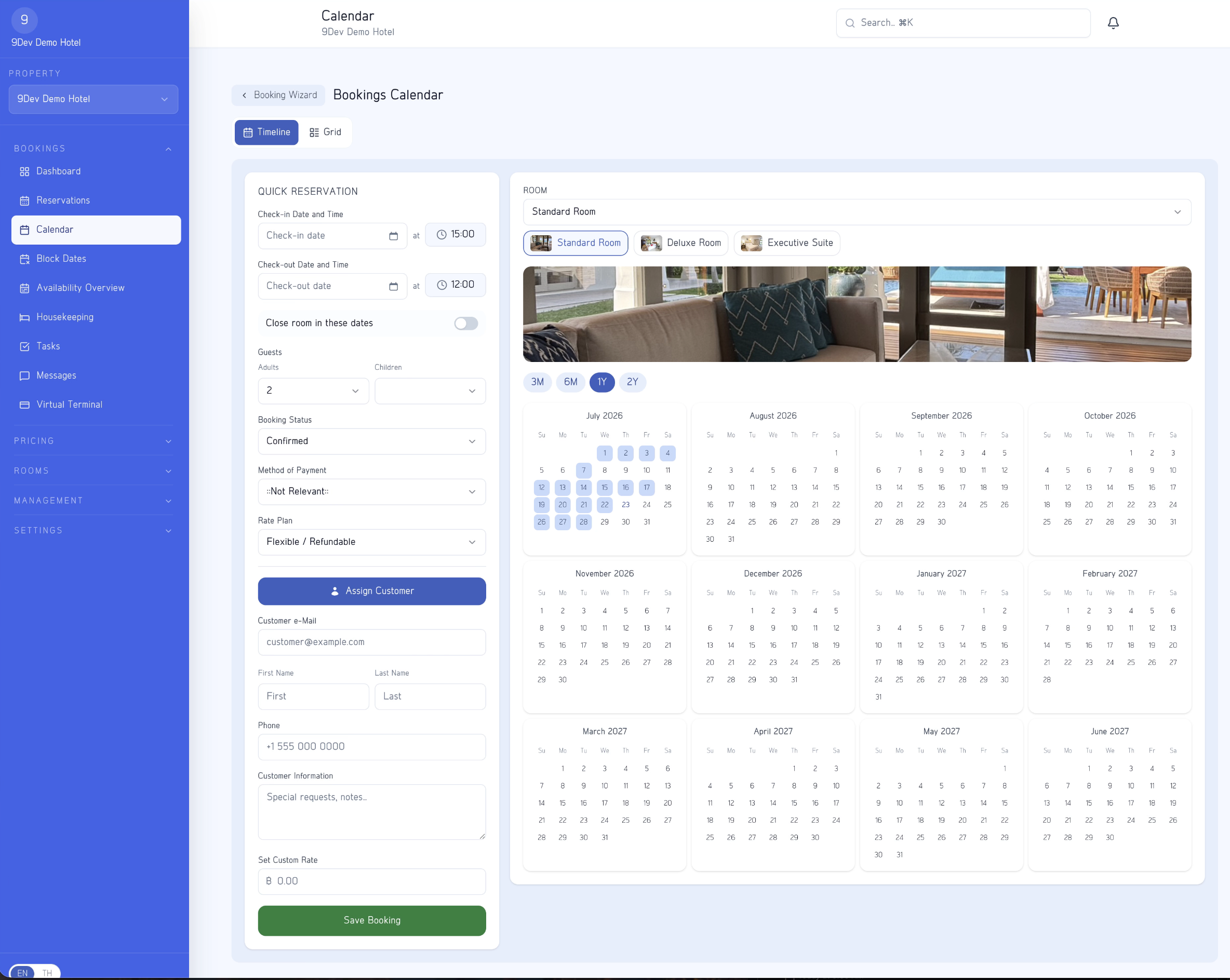
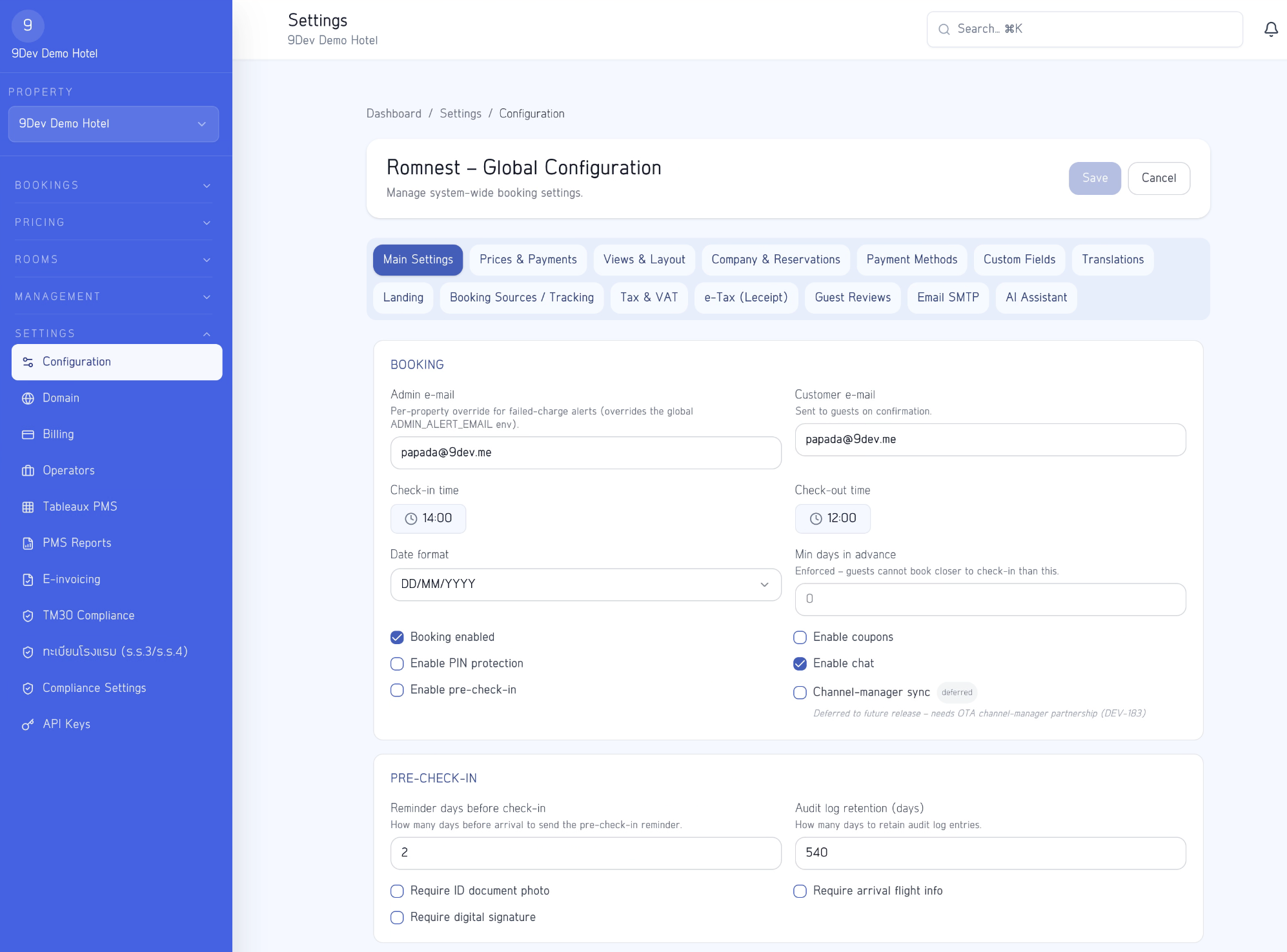
Compare the three system roles
| Booking Engine | PMS | Channel Manager | |
|---|---|---|---|
| Primary job | Show availability, rates, restrictions, and accept a guest reservation submission | Store and support reservations and internal property operations | Distribute rates and inventory across connected sales channels |
| Primary users | Guests and reservation staff | Front-desk and operations teams | Revenue or distribution managers |
| Important data | Stay dates, guests, rates, and policies | Reservations, room status, and internal work | Inventory, rates, and channel restrictions |
| Does not automatically replace | A complete PMS or channel manager | Every guest-facing booking experience | Internal operations or a guest booking flow |
Separate the roles by following the data
The booking engine is where guests choose dates, rooms, rates, and terms before submitting a reservation. A PMS receives or stores reservation information for internal work such as reservation management and room status. A channel manager exchanges inventory, rates, and restrictions with connected sales channels.
A calendar or reservation list in one product does not prove that it performs all three roles. Inspect the data it accepts, the work each user performs, and the destinations to which it sends updates.
- A booking engine answers how a guest searches and submits a reservation
- A PMS answers how staff manage property data and internal operations
- A channel manager answers how rates and inventory reach sales channels
- An integration answers how data moves without repeated manual entry
When does a hotel need one, two, or all three roles?
A hotel beginning with direct booking may first need a booking engine and a clear reservation process. Channel-management needs increase when multiple OTAs require frequent inventory updates. A property with complex front-desk, room-status, reporting, or internal workflows should evaluate PMS scope in detail.
Each role does not always require a separate product because one product may cover parts of several roles. Use a sample reservation data-flow test to find duplicate entry, missing updates, and unclear ownership before purchasing or retiring a system.
- Draw the path from each sales channel to the staff reservation record
- Identify the source of truth for rates, availability, restrictions, and guest data
- Identify events that require updates in more than one system
- Test modifications and cancellations as well as new reservations
Where Romnest fits
Romnest supplies a hotel website and booking engine where guests check availability, rates, and terms and submit a reservation. It also includes current capabilities for managing rooms, rates, availability, reservations, and hotel work according to plan.
That scope should not be interpreted as a universal PMS or channel manager. A hotel requiring distribution to multiple channels or specialist operational workflows should document its requirements and confirm the necessary integrations before deciding.
- Use Romnest for direct booking and the management capabilities included in the selected plan
- List required PMS depth such as room status, front-desk work, or specialist reports
- List channels and data direction when channel management is required
- Test live data flow before retiring the previous system
Important limitations
- PMS and channel-manager scope varies by provider, so evaluate the actual product features and data flow
- Romnest provides direct-booking and hotel-management capabilities by plan; it does not claim to replace every PMS or channel manager
- External connections require confirmation of the system, endpoint, data direction, and each provider's conditions
- Multiple systems can reduce or increase duplicate work depending on integration and data ownership, not tool count alone
Frequently asked questions
Is a booking engine enough on its own?
It can be when the main need is direct booking and the hotel already has suitable processes for internal work and other sales channels. Multiple OTAs or complex operations may require additional roles.
Does a PMS with a booking page still need a booking engine?
Check whether that page provides the guest experience, rates, restrictions, payments, and website connection the hotel needs. Do not decide from the module name alone.
Does a channel manager always prevent overbooking?
It exchanges inventory with connected channels, but outcomes depend on configuration, update timing, and the source of truth. Hotels still need testing and a process for discrepancies.
Should a hotel choose an all-in-one or several systems?
Choose the arrangement that covers requirements with a data flow the team can maintain. An all-in-one may reduce connections but still requires depth checks; several products require integration and clear data ownership.
Test Romnest's role against a real workflow
Create representative room data, test the guest booking flow, and review staff work before placing Romnest in the hotel's software stack.