
A guide to the guest booking interface
A hotel booking engine turns availability and rates into reservations
A booking engine is the guest-facing flow for selecting stay dates, checking availability, reviewing rates and conditions, choosing a room, and submitting the information required for a hotel reservation. It sits between the hotel's configured data and the guest experience, then returns the reservation to the hotel's management workflow.
It is intended for hotel owners and teams comparing booking pages, direct booking systems, hotel websites, and property management systems before choosing an operating setup.
Last reviewed:
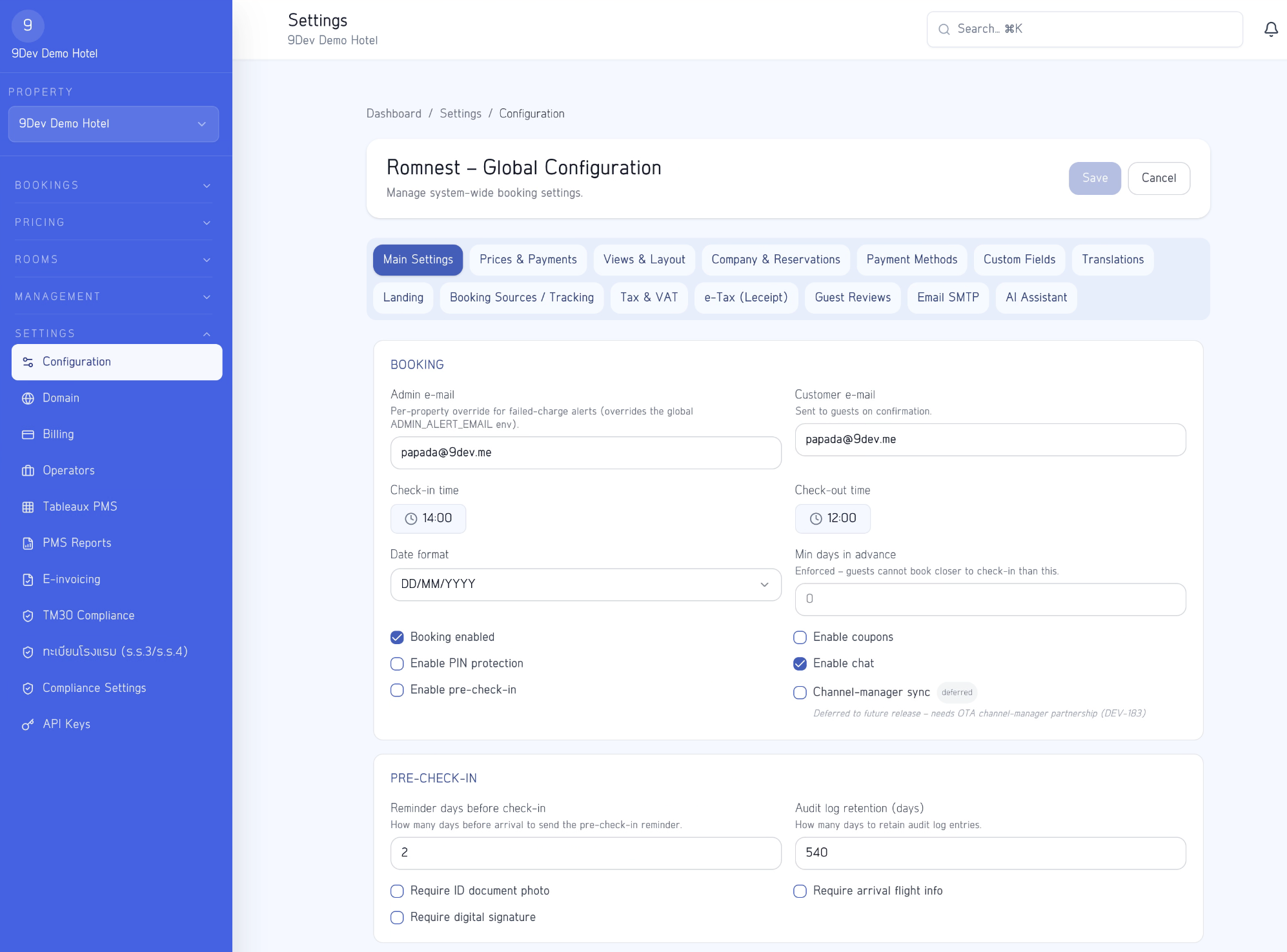
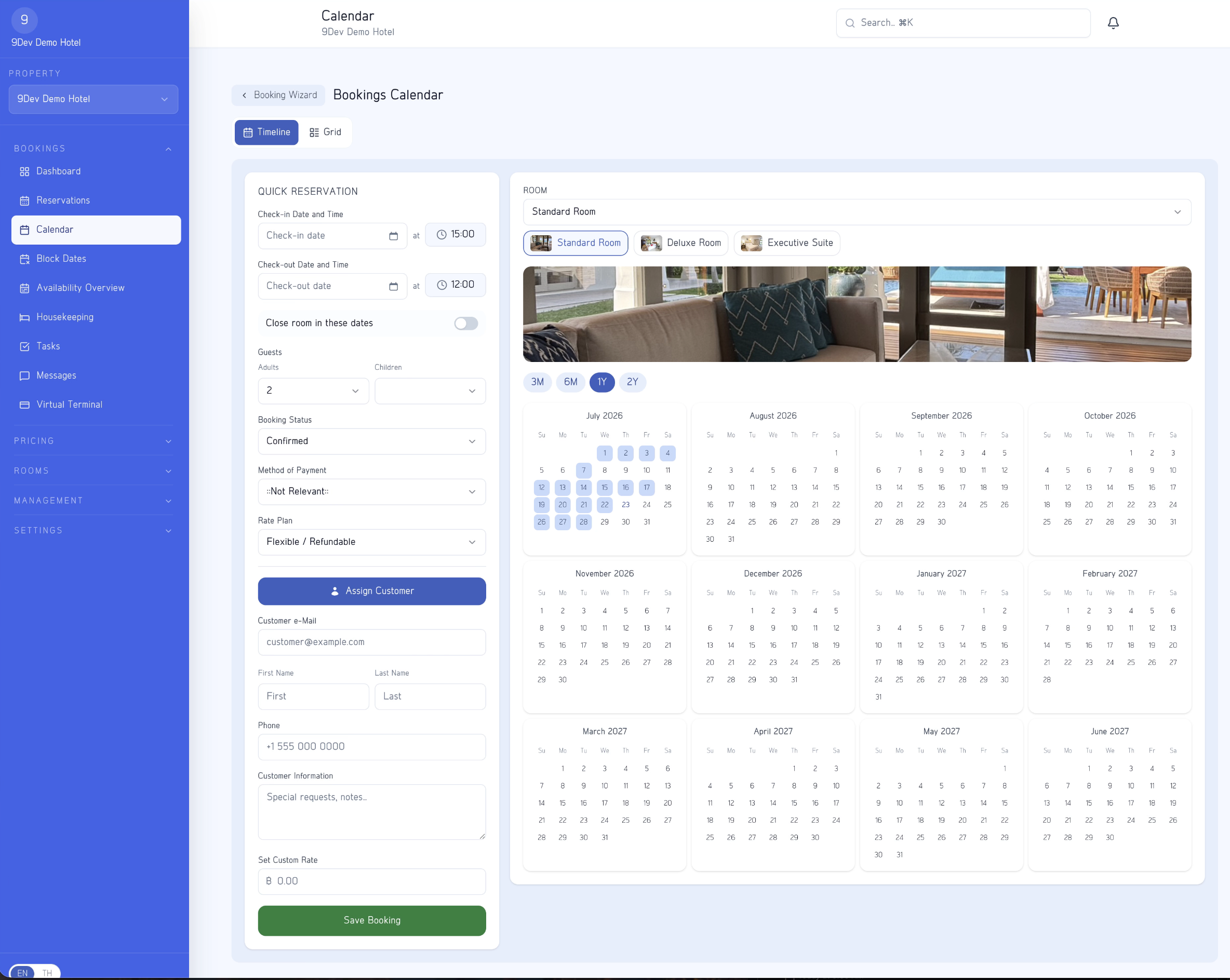
How does a hotel booking engine work?
When a guest selects check-in, check-out, and party size, the booking engine checks hotel rules such as available inventory, rates, minimum stay, and relevant policies before showing eligible options.
After the guest selects a room and provides the required details, the system creates a reservation through the configured flow. Confirmation and payment steps can vary by plan and hotel configuration.
- Collect stay dates and party size from the guest
- Check inventory, rates, and hotel restrictions
- Present eligible rooms, conditions, and options
- Return reservation details to the hotel's management workflow
How is it different from a website, PMS, or payment gateway?
A hotel website introduces the property and leads the guest into booking. The booking engine handles room search and reservation submission. A PMS focuses on internal property operations, while a payment gateway processes a transaction when online payment is enabled.
One product can combine several of these parts. Romnest connects a guest booking page with management tools, but separating their roles helps a hotel understand what data and integrations it must configure.
- Website: presents the property and directs guests to book
- Booking engine: checks options and accepts guest reservations
- PMS: supports hotel management and operational work
- Payment gateway: processes payment transactions
What should be prepared before launch?
The booking page can only reflect its source data. The hotel should complete room types, photos, rates, availability, minimum-stay rules, policies, and contact details, then test the page as a guest before sharing the live link.
- Check open inventory and closed sale dates
- Review rates, restrictions, and occupancy by room type
- Complete a test from date selection through confirmation
- Confirm the hotel team receives and can follow the reservation
Important limitations
- A booking engine displays the rates, inventory, policies, and property data configured by the hotel
- It is not the entire website, a PMS, or a payment gateway, although one product may combine several parts
- Online payment depends on the selected plan and payment-provider account configured by the hotel
- Romnest does not guarantee reservation volume or revenue from the booking page
Frequently asked questions
Is a booking engine the entire hotel booking system?
No. The booking engine focuses on the guest flow from room search to reservation submission. Connected management tools handle rates, inventory, records, and operational work.
Can a booking engine replace the hotel website?
It can provide a link for accepting reservations, but a full website still presents the brand, content, and property information before directing a guest to book.
Is a payment gateway required?
Not for every booking flow. Confirmation and payment behavior depend on the Romnest plan and the configuration selected by the hotel.
What should be tested before guests can book?
Test available dates, rates, minimum stay, occupancy, room selection, confirmation details, and the hotel's receipt of at least one reservation.
Test a booking engine with the hotel's real data
Start on Free, add rooms and rates, and test the complete flow from date selection to a reservation record.